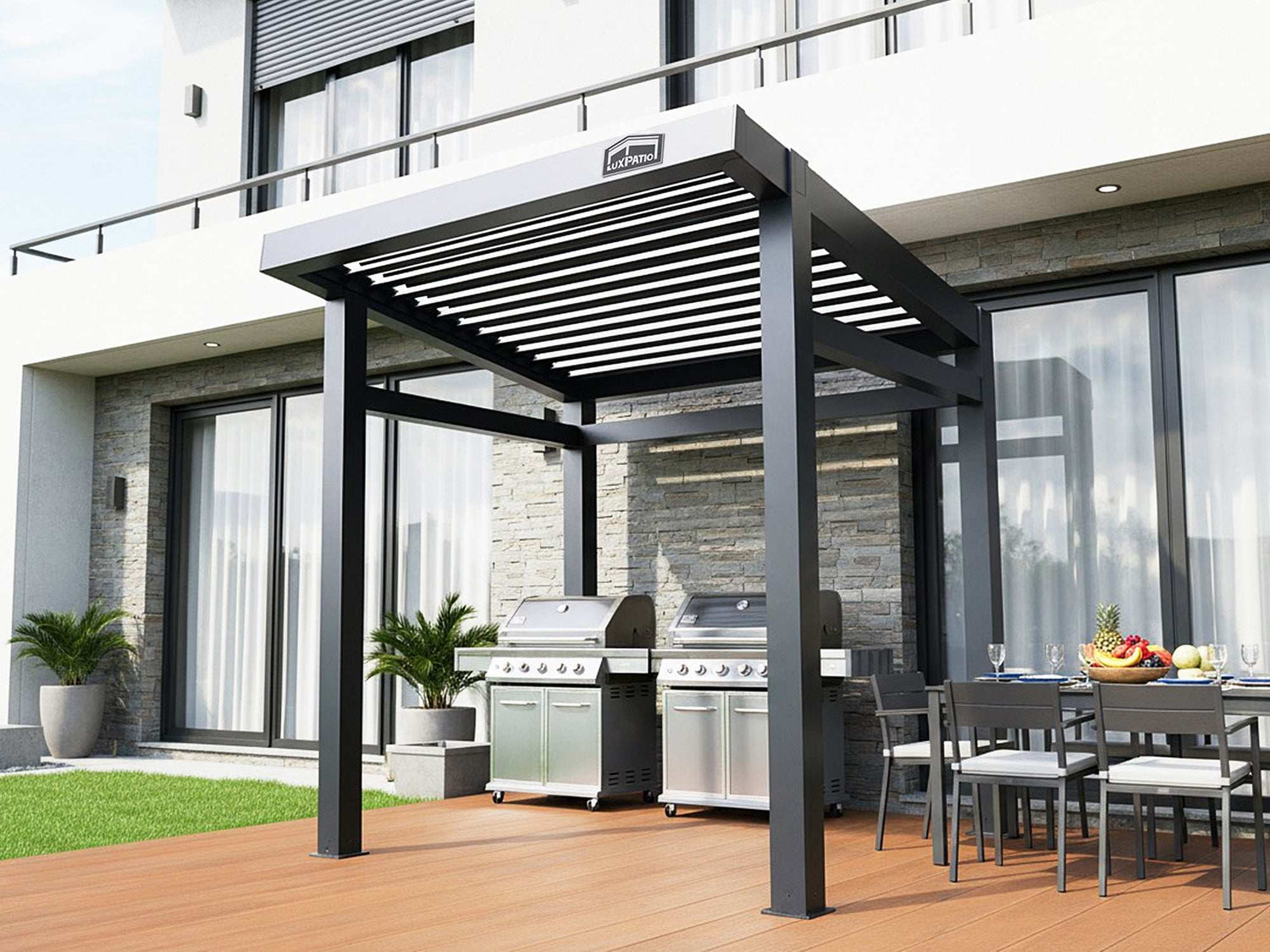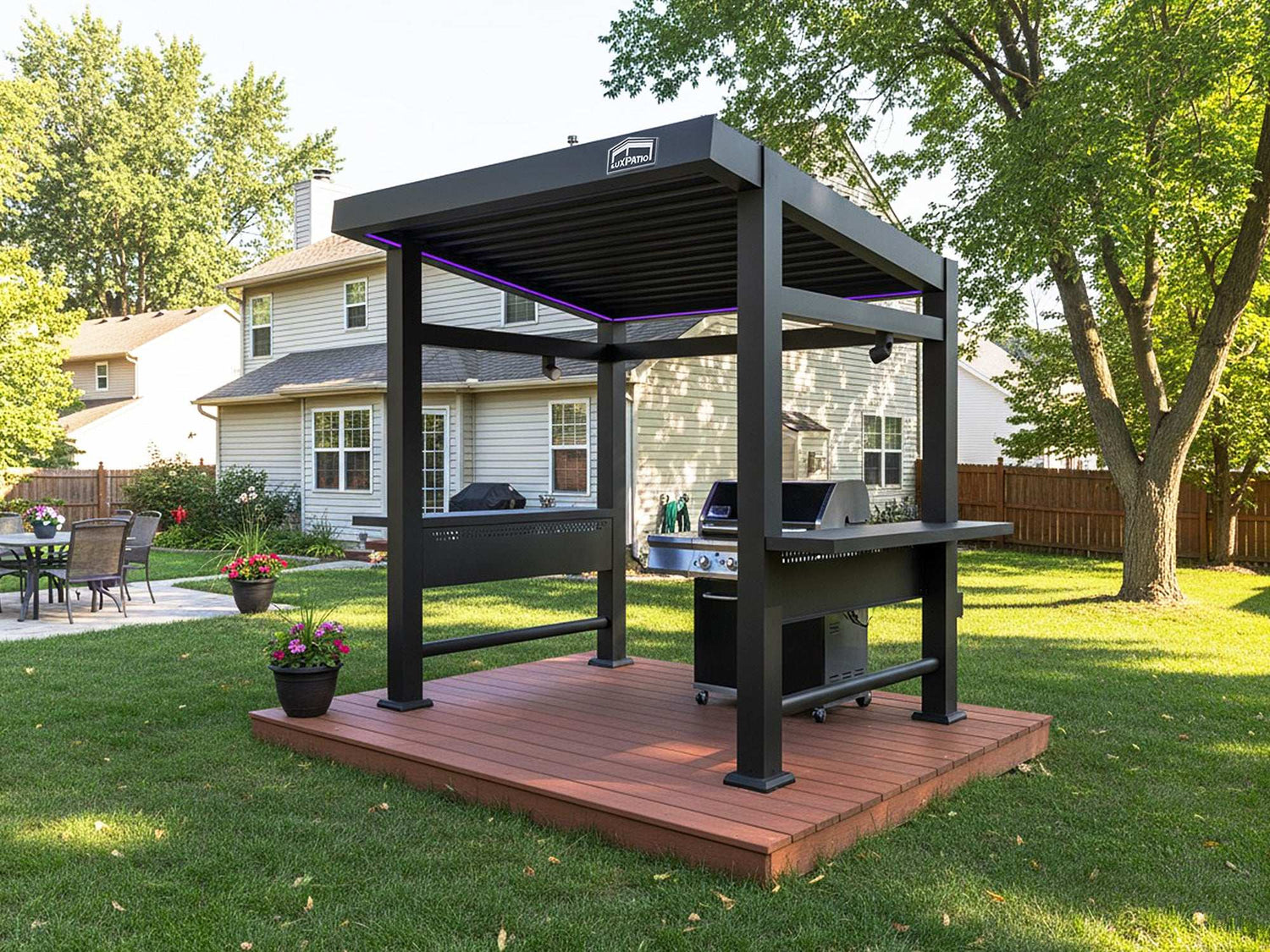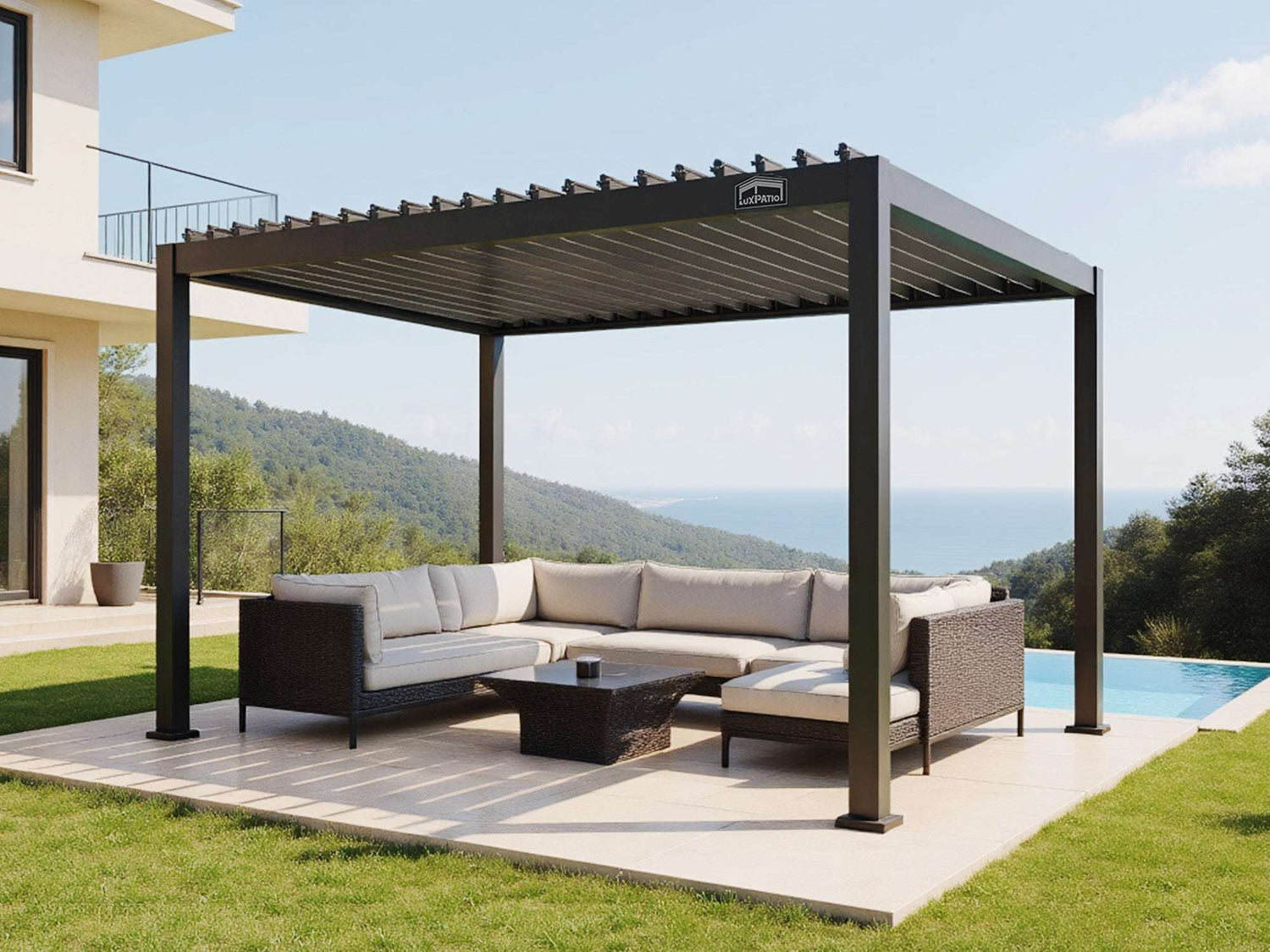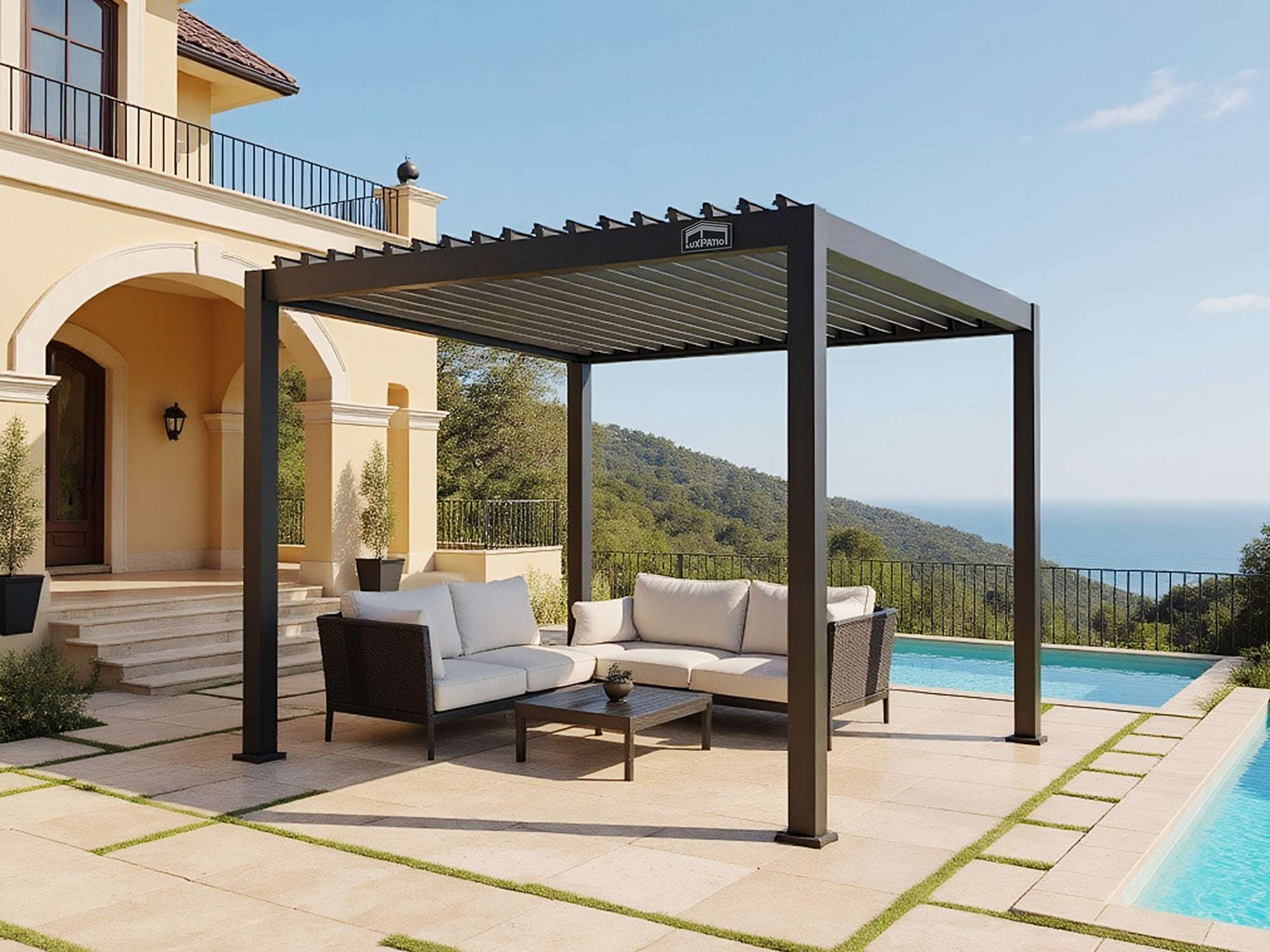
Many outdoor makeovers fall short for a simple reason: the pergola is the wrong size. The style and color look great, yet doors feel blocked, chairs scrape posts, or the yard suddenly feels smaller. When the dimensions match your patio, your furniture, and your everyday habits, a patio pergola stops feeling decorative and starts feeling like another room you actually use.
How to Choose the Right Patio Pergola Size for Your Space
Before thinking about 10 x 10 or 12 x 16, it helps to know what job the structure needs to do for you.
Daily Use
Picture a normal week, not a special party. How many people are usually outside at the same time? Are they eating, reading, scrolling on a phone, or watching kids play? What really needs shade: only seats, or also a grill, hot tub, or outdoor kitchen? Let those ordinary scenes drive your decisions, because they happen far more often than one big event.
Room to Move
Now grab a tape measure and look at the "non-negotiables." Note the length and width of your patio or deck, how far doors and sliders sit from the edge, and where steps, gates, AC units, and hose bibs are. Most people walk comfortably with about three feet of clear space behind chairs and along main routes. If your future patio pergola footprint eats all that, guests will constantly twist, squeeze, or step off the hard surface just to get around.
A quick sketch helps. Draw your patio, drop in furniture at realistic sizes, then outline the shaded zone you want. Often you will see that a slightly wider pergola does more for circulation than simply making it deeper.
Small Patio Pergolas (Up to 10' x 12'): From 10 x 10 Pergola to Cozy City Decks
Small pergolas create a defined outdoor corner rather than a full outdoor room. They are a good fit for compact yards, townhome patios, and roof decks where every square foot matters.
Small Layouts
In this range, scale matters more than anything. An 8 x 8 footprint suits two lounge chairs and a side table. A 10 x 10 pergola can shade a four-seat cafe table without feeling cramped if chairs are fairly slim. A 10 x 12 pergola adds just enough depth for a narrow rectangular table or a love seat with a single chair. Oversized sectionals and deep club chairs quickly overwhelm these footprints.
Small pergolas also work well when you plan a pergola on decks. Their lighter footprint makes it easier to align posts with deck framing below, keep loads where the structure is strongest, and avoid a top-heavy look on an elevated platform.
The trade-off is capacity and flexibility. On bright days, everyone wants to sit under the same small patch of shade, and there is limited room for extras like storage boxes or a bar cart. Taping out the outline on your patio, placing a few chairs, and walking through the space as if you are carrying plates is often enough to tell you if "small" will feel too small in daily life.
Where They Shine
Small pergolas are at their best when you want:
- A private nook for morning coffee just outside the living room
- A reading corner along a side yard that would otherwise be wasted
- A hint of structure and shade on a balcony or roof terrace
In these cases, a compact patio pergola gives you just enough form and shelter without swallowing the entire outdoor area.
Medium Pergolas (Up to 12' x 16'): The All-Round Size for Dining and Lounge
Medium pergolas often end up as the "do-everything" solution. They are large enough for dining and lounging in one place, yet still sit comfortably against most house facades.
Medium Layouts
Typical sizes include 11 x 13, 12 x 14, and the classic 12 x 12 pergola. In this band, you can comfortably fit a six-seat dining table or a small sectional with chairs and still keep a clear path from the house to the yard. Posts usually sit inside the hardscape instead of clinging to the very edge, which looks cleaner and feels safer.
This is the range where a patio pergola often turns into a second living room. Breakfast outdoors, kids doing homework at the table, a couple of adults stretched out on a weekend afternoon, and friends around the table in the evening all become realistic without shifting furniture every time.

Everyday Flow
A quick way to test a medium layout is to sketch your preferred furniture plan and then trace at least one obvious walking route that does not cut between people's backs and the table. If that route exists on paper, the space usually feels easy in real life. If every path runs through the tightest gap between chairs, you probably need a slightly wider or longer pergola.
Large Pergolas (16' x 20' and Up): The Ultimate Outdoor Room
Large pergolas suit wide patios, poolside spaces, and big lawns where you want a full outdoor room rather than a single seating group.
Going Big
Once the covered area reaches roughly 16 x 20 feet and beyond, you can comfortably plan several zones under one roof, for example:
- A sofa group and a fire table at one end
- A long dining table near the center
- Loungers or a daybed in a quieter corner facing the garden or pool
Lighting, outdoor rugs, and planters help define these zones so they feel like "mini rooms" instead of one big empty floor. In shared or light commercial spaces, similar footprints can also frame a small cafe terrace or part of a mall patio, with enough room for several tables and a clear aisle.
Sanity Checks
Before you commit to the largest model, stand in your yard and look from the house toward the planned spot. Ask yourself which views of trees, sky, or water you want to keep. Mark the future post positions with slender stakes and walk around them. If the imagined pergola feels like it will swallow the yard or block your favorite sightline, adjust the position or step down one size.
How Tall Should a Pergola Be?
Footprint controls how many people you can seat; height controls how the space feels while you sit there.
Height Ranges
For most residential patios, a clear height between eight and twelve feet works well. Around eight to nine feet feels snug and sheltered in small courtyards or narrow side yards. Around nine to ten feet suits many one-story homes with standard doors and windows. Around ten to twelve feet fits taller facades and wide lawns without looking stunted.
Fixtures and Feel
Everything you hang from a pergola reduces functional height. Doors need to swing freely below beams. Fan blades should sit at least seven feet above the walking surface. Heaters, pendants, and lanterns all come with their own clearance rules. A practical sequence is to pick your fan and main fixtures first, measure their total drop, then choose a pergola height that keeps them both safe and visually balanced.
If the numbers still feel abstract, stretch a string between two ladders at the proposed height, stand underneath, and picture rafters or louvers along that line. Your gut reaction in that moment is usually worth trusting.

Matching Your Pergola to Your Home and Yard
The best pergolas feel like they grew out of the house and the landscape, not like a random kit dropped in the middle of the patio.
With the House
Look straight at the wall where the structure will sit. The pergola width should usually stay within the main section of that wall instead of stretching far past the corners. Posts should avoid landing in the center of important windows and doors. The top framing line should relate sensibly to eaves and trim so the structure feels tied into the architecture instead of floating at an odd height.
On the ground, try to align posts with deck boards, joists, or paver joints where you can. Keep obvious routes from doors to steps, gates, and pools clear. When the frame respects these lines, even a simple patio pergola looks considered rather than improvised.
With the Yard
Now widen the view to include fences, hedges, trees, and distant sightlines. Fences and planting can help "hold" the sides of the space and make a pergola feel nested rather than isolated. Existing trees may already give partial shade at certain hours, so you can use the structure to fill in the gaps instead of duplicating coverage. Once size and placement feel right, you can safely play with pergola ideas like curtains, screens, or climbing plants, knowing the fundamentals are solid.
Conclusion
A smart pergola size rarely calls attention to itself. Doors open without hitting beams, chairs slide back without scraping posts, kids and guests move around without thinking, and the yard still feels open when you step back. If you picture normal days, measure honestly, sketch a few layouts, and test footprints on the ground, the right range of dimensions becomes surprisingly clear. The patio pergola you build then has a real chance to become the place you naturally walk toward every time the weather cooperates.
FAQs About Pergola Size and Patio Pergola Planning
Q1: How Big Should a Pergola Be for a Dining Table?
For a standard six-seat dining table, many homeowners aim for a shaded area of roughly 12 x 12 feet. That footprint gives room for chairs to slide back and for people to move behind them without turning sideways. A 10 x 12 pergola can work as a compact option if chair profiles are slim and you accept tighter clearances. If your chairs are deep or have wide arms, or if you want a serving cart under cover, moving up one size keeps the table from feeling pressed against the posts.
Q2: Is a Small Pergola Enough for Both Dining and Lounging?
It can be, as long as your expectations match the space. In a compact yard, a small structure might host a tiny bistro table most of the time, then switch to two loungers on very hot afternoons. Folding pieces and stools that double as side tables help a lot. If you regularly have more than four people outside, a medium footprint usually feels more relaxed and less like a constant puzzle.
Q3: Can a Pergola Work on a Second-Story Deck?
Yes, a pergola on an upper deck can be one of the nicest spots at home. The deck structure needs to support the extra load where posts land, and the roofline should avoid cutting across your best views from upstairs windows. When those two points check out, a covered upper deck often becomes the favorite place for morning coffee and quiet evenings.
Q4: How Large Should a Pergola Be for Shared Spaces?
For a small cafe courtyard, community garden, or apartment amenity area, footprints in the 16 x 16 to 16 x 20 range usually feel generous without taking over the site. That kind of space can hold several tables or seating groups with clear aisles for staff, residents, and strollers. Final dimensions should also leave room for cleaning, deliveries, and emergency access, so the area stays practical as well as pleasant.